
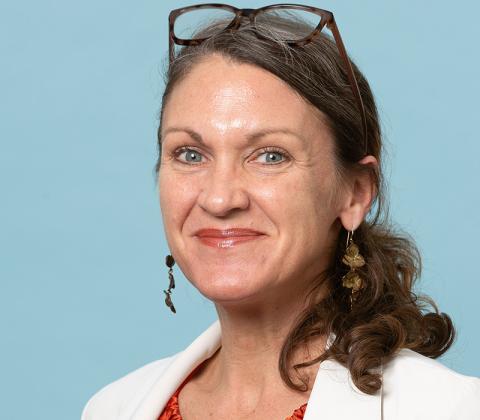
Katherine P. Theall, PhD, MPH
Professor: Cecile Usdin Professorship in Women’s Health
Education & Affiliations
Biography
As a social epidemiologist, Theall's research focuses on reducing health inequities by understanding and altering built and social neighborhood environments and social policies for better health in vulnerable populations locally, nationally, and internationally, and researching innovative methodologies to do so. Dr. Theall has received funding from the CDC, NIH, HRSA, and private foundations such as the Robert Wood Johnson and W.K. Kellogg Foundations. She has published over 250 peer-reviewed papers and given numerous scientific talks in her field. As director of an academic center with a strong base in community-partnered participatory research aimed at addressing social determinants of women and children’s health and the processes that shape these determinants, she continues to find ways to disseminate her team’s work and turn it into action.
Institute and Center Affiliations
- Violence Prevention Institute, Senior Director
- Mary Amelia Center for Women’s Health Equity Research (MAC), Co-Director
- Tulane Center of Excellence in Maternal and Child Health, Director
- Tulane Center of Excellence: Sex-Based Biology & Medicine, Investigator
- Partners Advancing Health Equity (P4HE), Investigator
Center for Community-Engaged Artificial Intelligence, Affiliate Faculty
Research Areas
- Social and structural determinants of health, health disparities, and health inequities
- Maternal and child health and women's health
- Community, interpersonal and biologic stress
- Substance use and mental health
Honors & Awards
- 2024 - 2024: Oliver Fund Award for Excellence in Faculty Mentoring, Tulane University
- 2017: Fulbright US Scholar Award
- 2015: New Orleans 50th City Business Women of the Year
- 2012: 101 Most Influential Professors of Public Health, MPH Programs List
- 2005: Delta Omega Public Health Honor Society, Eta Chapter
- 2001: Junior Investigator Award, National Institute on Drug Abuse (NIDA)
- 1997: Phi Kappa Phi, Phi Beta Kappa, Golden Key National Honor Societies
Publications
Please view Dr. Theall's publications at her NCBI profile page.
Place Matters: Adaptable Solutions to Violence at the Community Level
National Institutes of Health, Eunice Kennedy Shriver National Institute of Child Health and Human Development (R01HD095609) Principal Investigator: Theall, Katherine P. The objective of the Healthy Neighborhoods Project is to conduct a cluster randomized trial across 23 New Orleans neighborhoods to test the impact of neighborhood beautification—blighted property remediation, or cleaning up vacant land and homes—in preventing youth and family violence. The impact will be evaluated through existing secondary data as well as a longitudinal neighborhood-based cohort study and qualitative methodologies. The moderating impact of other neighborhood conditions (e.g., alcohol availability, access to nature and recreational spaces) will be examined. It is paramount that we expand larger scale, cost effective community approaches to violence prevention that capitalize on the built environment. Abandoned buildings and vacant lots of land in many cities are important because these blighted spaces are abundant and highly modifiable with the potential for sustained, long-term health and safety benefits at relatively low cost.
Building a Culture of Health Through the Built Environment: Adaptable Solutions to Community Well-Being
Robert Wood Johnson Foundation, RWJF (76131) Principal Investigator: Theall, Katherine P. Building on the Healthy Neighborhoods Project, this research is supported through RWJF’s Culture of Health initiative and aimed at testing the efficacy of the cluster randomized trial on drivers in Action Area 1 (Making Health a Shared Value)—well-being and heath interconnectedness, sense of community and sense of safety, and civic engagement—as well as testing the causal relation between changes in this drivers and health and social outcomes—family and youth violence, substance use and mental health. Neighborhood change (part of Action Area 3, Creating Healthier, More Equitable Communities) could be a catalyst that engages residents to see the connections between conditions in our community and health and may be one scalable tool for making health a shared value.
Community and Interpersonal Stress, Alcohol, and Chronic Comorbidities among Persons Living with HIV (PLWH)
National Institutes of Health, National Institute on Alcohol Abuse and Alcoholism (P60AA009803), Louisiana State University Health Sciences Center, Comprehensive Alcohol and HIV Research Center (CARC), New Orleans Alcohol and HIV (NOAH) Study Principal Investigator Research Component 1: Theall, Katherine P. The objective of this project is to determine the impact of community and interpersonal stress on behavioral and chronic comorbidities among PLWH, the unique role that alcohol use and sex play in the pathways. Our long-term goal is translation of findings to improve secondary prevention and health care among PLWH to achieve better clinical outcomes. Our central hypothesis is that exposure to stressors at the community and interpersonal levels will impact clinical comorbidities, such as cardiometabolic and cognitive outcomes in PLWH, through impacts on alcohol use and additional behavioral and coping mechanisms. An enhanced understanding of the impact of placed-based and social contextual exposures will provide critical, novel information on mechanisms that underlie challenges for optimal care of PLWH, also informing the role of social determinants and alcohol with comorbidities in the general population.
Development of a Geographical Momentary Assessment (GEMA) Informed Trauma Intervention in Violence-Affected Persons Living with HIV
Building off the aforementioned NOAH cohort, this National Institutes of Health, National Institute on Alcohol Abuse and Alcoholism (R34AA122003) supported study is aimed at developing a trauma-informed mobile intervention by adapting an evidence-based intervention and adding novel geographic ecological momentary assessment (GEMA) identified targets for intervention. Along with co-PI, Dr. Gretchen Clum, the team will engage participants via smartphones, coupling GPS location technology and a mobile daily diary app that will allow researchers to discover how daily neighborhood experiences and psychosocial factors impact HIV medication adherence and viral suppression, and sex differences in these factors. The study builds on an existing evidence-based trauma intervention, Living in the Face of Trauma (LIFT), adapting it to a mobile platform, and adding the geographical location-based “in-the-moment” intervention strategies that are vitally needed in order to reach people, quite literally, where they are.
Tulane Center of Excellence Maternal and Child Health (CEMCH)

Our goal is to create an academically stimulating and nurturing environment for researchers in MCH or new to MCH, to facilitate their career development, and encourage paradigm-shifting, interdisciplinary / interprofessional collaboration and team science to advance research and practice.
Learn more about CEMCH and about the academic area of specialization in maternal and child health.
This program is funded by Health Resources and Services Administration (HRSA), Strengthening the MCH Public Health Academic Pipeline (Grant #T76MC04927) to meet the goals of training the MCH workforce and to strengthen academic-practice partnerships and the MCH academic pipeline.
As a cornerstone initiative of the Violence Prevention Institute (VPI), the Pincus Violence Prevention Scholarship Program at Tulane University invests in emerging leaders, strengthens academic and community partnerships, and ultimately prevents violence exposure among children and families. The scholarship is supported by a grant from the Pincus Family Foundation.