
Graduate Public Health Programs for Veterans & Military
Your Service Is a Head Start in Public Health
Tulane's Celia Scott Weatherhead School of Public Health & Tropical Medicine accepts Post-9/11 GI Bill and Yellow Ribbon benefits for all eligible graduate programs — including fully online options built for working professionals and active-duty service members.
From the Field to Public Health — the Connection Is Closer Than You Think.
Veterans and active-duty service members already know what public health demands. You've protected the people around you, managed complex systems under pressure, and made decisions where the stakes were real. At Tulane, that background isn't something we ask you to set aside — it's something we build on.
Whether you're transitioning out of service or looking to advance your career while still serving, a graduate degree in public health from Tulane gives you the tools to lead in one of the most mission-driven fields there is. And we make it as straightforward as possible to get here: we accept Post-9/11 GI Bill benefits for every eligible graduate program, participate in the Yellow Ribbon Program, and have a dedicated certifying official specifically for WSPH students.
Public health careers span the VA, the CDC, FEMA, global health organizations, and federal agencies — familiar environments for people who've served.
Master's Programs for Veterans and Military - Built for Where You've Been
These programs are a strong fit for students with military backgrounds.
Not sure which direction is right for you? Our admissions team is here to help you figure it out - no pressure, just an honest conversation about your goals.

If you've worked in defense health, intelligence, or crisis response, this program was made for professionals like you. The MS in Health Security sits at the intersection of public health, emergency preparedness, and national security policy - bridging the two worlds many veterans already live in.

If you've spent your service paying attention to how environments affect the people working in them - this is the program that formalizes and deepens that expertise. The MSPH in Industrial Hygiene prepares graduates to become Certified Industrial Hygienists, with direct applications in military, federal, and civilian occupational health settings.

This fully online program is designed for working professionals - including those still in service or recently separated. You'll learn to lead community health programs from wherever you are, on a schedule that works around your life.

Epidemiology is the science of tracking, analyzing, and stopping the spread of disease across populations. Military personel and veterans with experience in field medicine, data analysis, or strategic operations will find the transition to this work intuitive - you already think in systems.
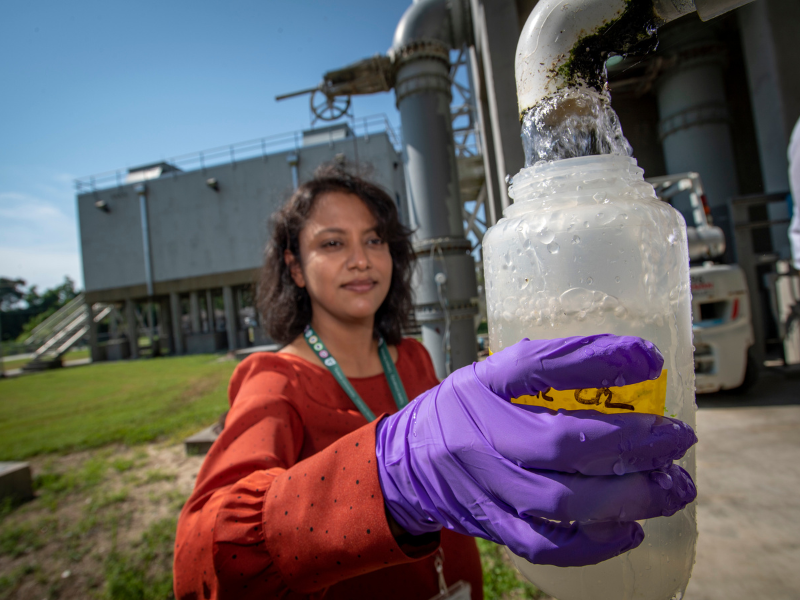
Veterans with backgrounds in hazardous materials, environmental monitoring, or industrial safety will recognize a great deal of this work. This program prepares you to protect communities from environmental and occupational health threats - a direct extension of the work many service members have already been doing.
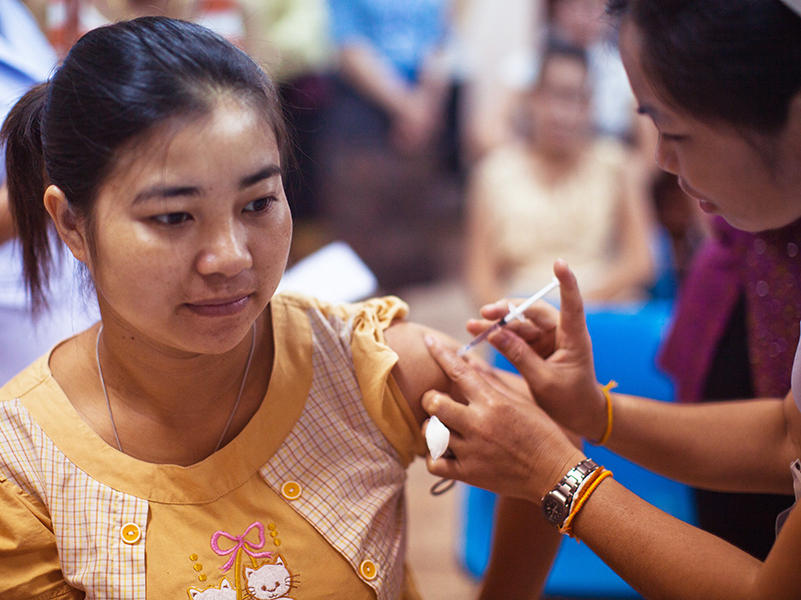
If you've deployed abroad and seen firsthand how instability, poverty, and infrastructure failures shape health outcomes, this program gives you the framework to address those problems at scale.

Understanding the laws, funding structures, and policy systems that drive public health decisions - at every level, from local communities to federal agencies - is its own kind of operational knowledge. This program builds it.

If you've managed budgets, led teams, or navigated the operational complexity of a military health system, the MHA translates that experience directly into healthcare leadership - including at the VA.

Senior military leaders already know that the hardest health problems aren't clinical - they're social. Food insecurity on base. Mental health stigma in the ranks. The downstream effects of repeated deployment on families and communities.

You've operated in environments where health systems barely exist, where the mission depended on understanding local infrastructure, building trust across cultures, and making decisions with incomplete data.

Common Questions About Using VA Benefits at Tulane
Does Tulane's School of Public Health accept the GI Bill?
Yes. Tulane's School of Public Health accepts Post-9/11 GI Bill (Chapter 33) benefits for all eligible graduate programs, including online programs.
Is Tulane in the Yellow Ribbon Program?
Yes. Tulane participates in the Yellow Ribbon Program for WSPH graduate students. Up to 10 students per year receive Yellow Ribbon funding, which covers tuition above the GI Bill's annual cap. Spots are first-come, first-served — contact our admissions team or Susan Cantrell early in your application process to confirm availability.
Can I complete an MPH at Tulane while still on active duty?
Yes. Several of our programs — including the MPH in Community Health Sciences, the MSPH in Industrial Hygiene or the MS in Health Security — are fully online and designed for working professionals, including active-duty service members. You can apply and enroll regardless of your duty station.
Does Tulane waive the GRE for veterans or military applicants?
No GRE is required for any WSPH program.
How do I start the VA certification process at Tulane?
Contact Susan Cantrell, Tulane's VA certifying official for WSPH students, as early as possible — ideally before you're admitted. She'll walk you through the steps. Reach her at cantrell@tulane.edu or 504-988-7642.
Ready to Take the Next Step? Admissions requirements and application process
Veterans and active-duty students follow the same admissions process as all WSPH applicants. Most programs accept applications three times a year — which means you don't have to put your life on hold to find the right entry point.
How students apply
Most WSPH programs use SOPHAS - the centralized application system for schools of public health. Students create one account and can apply to multiple programs. The MHA and several online programs use a separate WSPH simplified application form.
What every application needs
For all master's programs:
- Official transcripts from all institutions attended
- Personal statement addressing program fit, professional goals, and relevant experience
- Resume or CV
- Minimum 2 letters of recommendation (3 for DrPH)
No GRE required
The GRE is not required and will not be reviewed for any WSPH program.
A note on GPA
There is no published minimum GPA for master's programs. Academic achievement matters, but context and trajectory are taken into account. Students who are concerned about their GPA should contact admissions directly before ruling themselves out.
Key deadlines (TO BE SIMPLIFIED)
| Program | Priority deadline | Final deadline |
|---|---|---|
| On-Campus MPH / MS | Spring Oct 1 Summer Feb 1 Fall Mar 1 | Spring Dec 1 Summer Mar 15 Fall Jun 15 |
| On-Campus MS Clinical Investigation | Spring Nov 1 Summer Mar 1 Fall Jun 1 | Spring Dec 1 Summer Apr 1 Fall Jul 1 |
| On-Campus PhD | - | Fall Dec 1 |
| Online MPH / MS | Spring Nov 1 Summer Mar 1 Fall Jun 1 | Spring Dec 1 Summer Apr 1 Fall Jul 1 |
| On-Campus MHA | Fall Jun 1 | Fall Jul 1 |
| Online MHA | Spring Nov 1 Summer Mar 1 Fall Jun 1 | Spring Dec 1 Summer Apr 1 Fall Jul 1 |
| Online DrPH - IHSD track | - | Fall Jan 15 |
| Online DrPH - SBPS track | - | Spring Jul 1 Fall Jan 15 |
We encourage military applicants to reach out before applying — our team understands deployment schedules, PCS moves, and the realities of separating from service. If you have questions about timing or your specific situation, just ask.
Online MHA - additional requirement
The online MHA requires a minimum of 2 years of health-related work experience and employer support for the program's experiential learning component. It is designed for working professionals - advisors should keep this in mind when referring recent graduates.
DrPH - additional requirement
The DrPH requires a minimum of 3 years of professional public health experience and an MPH or related master's degree. It is an advanced practice degree designed for mid-career professionals.
GI Bill® is a registered trademark of the U.S. Department of Veterans Affairs. More information about education benefits is available at benefits.va.gov/gibill.
