
Environmental Health Sciences
The Department of Environmental Health Sciences is training the next generation of public health leaders with the knowledge and tools to address environmental health threats through research and hands-on practice experience.
Our students gain a solid environmental public health foundation including toxicology, exposure science, data science, climate change, and risk assessment. They also have the opportunity to apply their training to a wide spectrum of environmental health issues to develop equitable interventions across populations.
Climate and Health in the Gulf South ENVIRONMENTAL HEALTH NEWS TULANE PUBLIC HEALTH MAGAZINE
-
10%
The department ranks in the top 10 percent of environmental health sciences departments.
-
50
billion dollars in grants generated since 1999
-
77
cool things that the department has acheived
About the Department
The Department of Environmental Health Sciences (ENHS) graduate programs are designed for students to gain a range of expertise in environmental public health topics including air and water quality, toxicology, exposure science, climate change, risk assessment, and risk communication.
We offer specialized tracks for students interested in focusing their studies in industrial hygiene or disaster management and a competitive PhD program for students interested in focusing on research.
Our goal is to prepare students for careers in high-demand areas of environmental health research and practice.
Welcome to the Department of Environmental Health Sciences!
Felicia Rabito, PhD, MPH
Interim Chair
Featured Program
MPH in Environmental Health Science
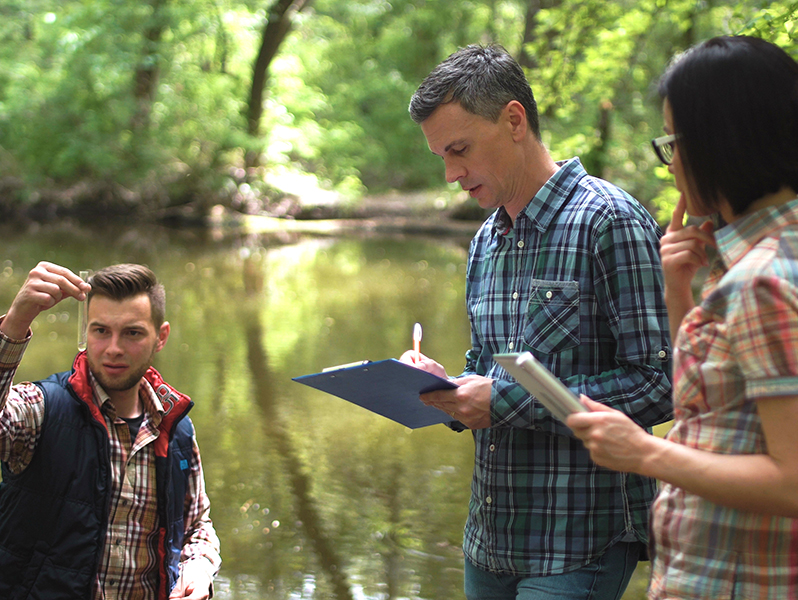
The Environmental Health Sciences (EHS) MPH Program at Tulane will provide training in assessment of environmental health hazards, integrating emerging knowledge and strategies to understand and reduce public health risk.
The curriculum and applied learning opportunities draw upon Tulane's extensive research and over five decades of experience in providing leadership training in environmental health to students locally, nationally and from around the world to tackle critical contemporary issues in climate change, exposure science, and data science.
Academic Programs & Resources
Student News
Four ENHS Students Win Awards in Water Quality Research

Water is fundamental to human health. Safe and reliable water systems protect communities from exposure to numerous environmental hazards. And beyond basic needs, water quality directly influences public health outcomes, economic productivity, and community resilience, particularly in regions vulnerable to climate change, aging infrastructure, and environmental pollution.
Faculty News
Melissa Gonzales appointed to National Academies committee on veterans’ health

Melissa Gonzales, PhD, MS, professor of environmental health at the Tulane University Celia Scott Weatherhead School of Public Health and Tropical Medicine, has been appointed to a National Academies of Sciences, Engineering and Medicine committee conducting a major epidemiologic study on the health of veterans who served at Fort McClellan between 1979 and its closure in 1999.
Learning Library
What is Health Security?
Healthcare professionals must adapt to shifting conditions within a changing world. That philosophy is at the heart of the answer to the question: What is health security? Health security is defined as the activities required, both proactive and reactive, to minimize the danger and impact of acute public health events that endanger people's health. Health impacts are not constrained by the borders of countries. Thus, many international organizations refer to health security as “global public health security.”