
From Water Insecurity Research to Empowerment Programming in Peru
Student Profile: Marisa Arsenault

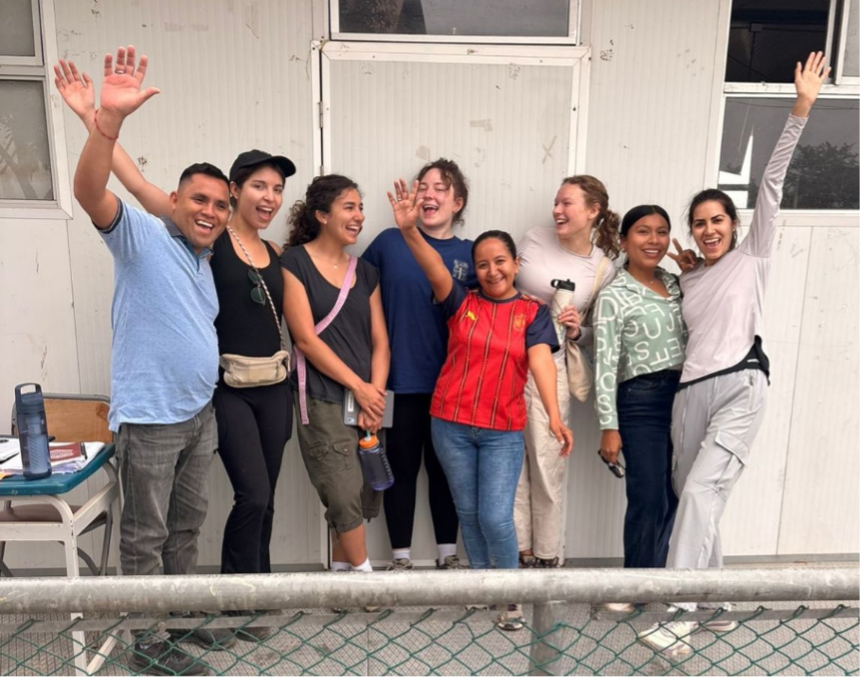
In northern Peru, Marisa Arsenault (third from left) supported water insecurity research through the INWISE Project while gathering insights to adapt the Project Soar girls' empowerment curriculum for local schools.
Different photo over there - headshot, maybe?
Project Info
Practicum Location
Tambogrande, Piura Region, Peru Focus Areas Water Security & WASH Adolescent Girls Empowerment
Degree & Department
MPH, International Health & Sustainable Development
WSPH Faculty advisor
Dr. Shalean Collins
Partner Organizations
INWISE Scales Project
Project Soar
Fe y Alegría
About INWISE
The Institutional Water, Sanitation, and Hygiene Experiences (INWISE) Project develops tools that measure whether the fundamental human right to reliable access to safe water, sanitation, and hygiene is being realized.
Future Plans
To continue pursuing research that addresses global health challenges.
Interested in an International APE?
Are you a student interested in pursuing an APE internationally or participating in other WSPH international opportunities? Visit here to find out more….
From Water Insecurity Research to Empowerment Programming in Peru
What are you doing in your practicum?
I supported the validation of the Institutional Water, Sanitation, and Hygiene Experiences (INWISE) Project in the region of Piura in northern Peru, by conducting surveys with staff and students, filling out an observational checklist, and collecting water samples to test for bacteria.

During fieldwork I also gathered informal information by talking with the students about their environmental concerns, how water insecurity affects their daily lives, and what they would like to see in an after-school program. My practicum deliverable is adapting the Project Soar female empowerment curriculum for the Peruvian context. Project Soar has successfully been implemented in Morocco and is available in Arabic, French and English. The organization expressed interest in adapting the program for Peru, and my involvement with the INWISE study provided an opportunity to better understand the school environment and community context to help ensure the curriculum is culturally relevant for Peruvian students.
How did this international practicum opportunity come about?
This practicum was made possible with funding from the Newcomb Institute and through collaboration among several partners. The Institutional Water, Sanitation, and Hygiene Experiences (INWISE) Project aims to develop tools that measure whether access to water and sanitation as a fundamental human right is being realized. To validate the INWISE Scale, Dr. Tallman worked with Loyola University Chicago students, academic partners at Tulane, her Peruvian colleague Lucía López Flórez, and a local team of enumerators.

One of the project’s key partners is Fe y Alegría, a global network of Jesuit schools. In Peru, the research team closely partnered with the Fe y Alegría Rural Network N°48 schools, who had shared concerns regarding their access to clean water and its impact on human health and local ecologies. Finally, Project Soar, which is an organization that my advisor worked with in the past, expressed interest in expanding their project to Spanish speaking countries.
These are connections I made thanks to my advisor, Dr. Shalean Collins! Dr. Collins is a longtime colleague of Dr. Tallman, and because of my interest in maternal and child health and water insecurity research, I was a good fit for the project. Dr. Tallman has been involved with this community for many years and often mentors students through field experiences. Lucía López Flórez, Dr. Tallman's project coordinator, helped orchestrate everything. We participated in several training sessions leading up to the trip to ensure everyone was well prepared for fieldwork.
What advice do you have for other students to make the most of their time at Tulane?
Coursework and what you learn in class is important, but connections and networking with your classmates and professors might be the best way to make the most of your time at Tulane. All the faculty in my department have such a wealth of knowledge and I've learned the most from my research assistantships and my work outside of the classroom.
Knowing what skills you want to strengthen also helps in getting opportunities! It helped me identify opportunities, communicate my interests to faculty and pursue experiences aligned with my goals.