
High school students get a head start on their future in public health
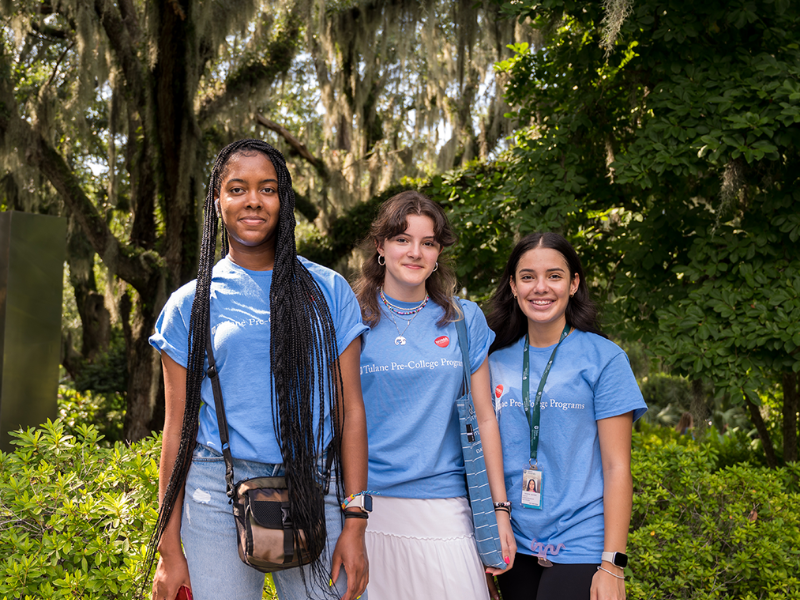
This summer, high school students curious about health, equity, and global impact can step into the world of public health through Tulane’s Futures in Public Health, a new summer 2026 program from the Celia Scott Weatherhead School of Public Health and Tropical Medicine.
Through immersive coursework and collaborative learning, high school students can explore the science, policy, and communication behind today’s most pressing public health issues and discover the variety of career paths available.
The new Futures in Public Health initiative differs from previous offerings at Tulane and other universities by providing a more holistic picture of public health.
In the past, Tulane’s summer programs in public health focused on epidemiology and infectious disease. While those courses were popular, they didn’t go far enough.
“While demand for those courses was strong, they represented only a small slice of what public health actually is,” says Dr. Janna Wisniewski, program director. “The Futures in Public Health program was designed to meet student interest while also broadening their understanding of the field and its possibilities.”
New courses include a range of exciting, diverse subjects such as nutrition, health policy, communications, and health equity.
By offering a more robust selection of courses for students, Tulane is helping potential public health leaders observe different pathways to the important work that public health professionals do.
New Orleans is an extraordinary living laboratory for public health. Home to the first school of public health in the nation, the city has a long history of responding to public health threats, and continues to confront environmental health challenges, health equity issues, and a unique policy environment.
Per Wisniewski, these experiences offer lessons that are deeply local as well as globally relevant.
“The current generation of high school students grew up during the COVID-19 pandemic. They implicitly understand the importance of public health, but many do not yet realize that it is a field in which they can build a meaningful career, serving their communities both domestically and internationally,” she points out. “We saw a clear need to introduce public health as a viable, exciting pathway at a critical moment -- when students are thinking seriously about college and choosing a major.”
Students in Tulane’s summer enrichment program can take up to six one-week courses. They can choose all courses from the Futures in Public Health program, or they can mix and match across multiple programs. Courses are not strictly lecture-based, and often incorporate hands-on learning, guest speakers, and field trips.
“Whatever a student’s skills or interests, there is a place for them in public health,” Wisniewski says.
The program accommodates students who would like to take advantage of campus housing in two-week sessions as well as students commuting locally. Limited need-based financial aid is available, and Louisiana residents are considered for Tulane Pre-College’s Louisiana Promise scholarship.
Find out more about the program here:
https://summer.tulane.edu/futures-in-public-health
Details on tuition and aid are available here:
https://summer.tulane.edu/tuition-aid