
5 Questions with Gerry Cox, MD (MHA 1997)
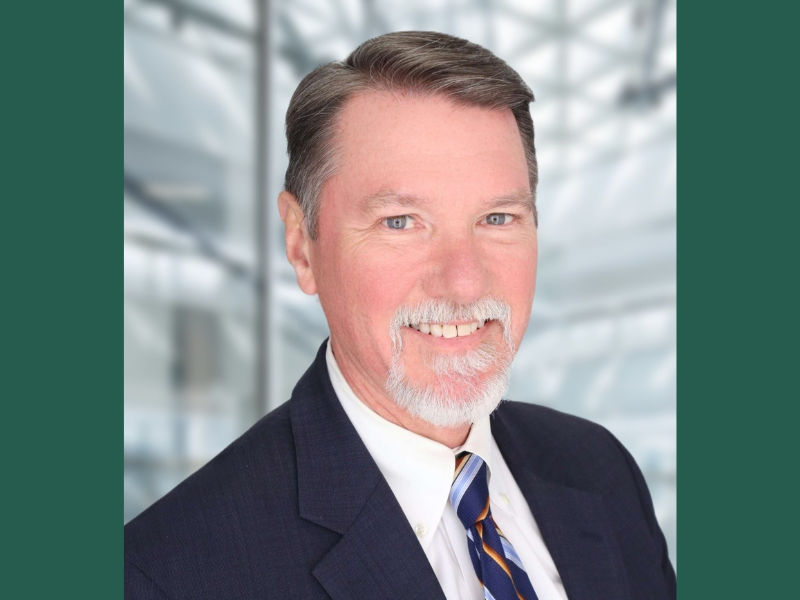
We caught up with several Celia Scott Weatherhead School of Public Health and Tropical Medicine alumni recently and were able to ask them about their Tulane journey. Here are Five Questions with Gerry Cox, MD (MHA 1997).
Gerard R. Cox, MD, MHA retired from Federal service in December 2024 after nearly 11 years as a senior executive in the Veterans Health Administration. VHA is the largest integrated health system in the U.S. with 9 million enrolled Veterans served by more than 400,000 employees at 170 inpatient medical centers and 1,200 outpatient clinics.
As Assistant Under Secretary for Health for Quality and Patient Safety from 2020 through 2024, Dr. Cox led VHA’s national health care quality improvement, patient safety, data analytics, and performance measurement programs and was the executive sponsor of an ambitious strategy to reduce harm and achieve high reliability across the vast Veterans’ health system. He is widely credited with driving a major transformation in organizational culture to build trust and psychological safety and improve quality, as evidenced by annual employee survey responses, increased patient safety event reporting, patient satisfaction results on industry-standard surveys, and VA medical center ratings for overall quality of care compared with private-sector hospitals.
In previous roles as a member of VHA’s executive leadership team, Dr. Cox served as Executive Director of the Office of the Medical Inspector, Assistant Deputy Under Secretary for Health for Integrity, and Deputy Under Secretary for Health for Organizational Excellence, helping to restore public trust in VA by impartially investigating allegations of wrongdoing, fostering an ethical culture, enhancing oversight, and strengthening accountability.
During his previous military career of more than 30 years as a U.S. Navy medical officer, Dr. Cox served in a series of hospital leadership roles including service chief, service line leader, chief operating officer, and chief executive officer. He held executive positions on the staffs of the Navy Surgeon General, the Commandant of the Marine Corps, the Commander of U.S. Navy forces in the Middle East, and the Naval Inspector General. He also served as a White House physician for Presidents William J. Clinton and George W. Bush.
Dr. Cox graduated with honors from Dartmouth College in 1979, earned his medical degree from the University of Massachusetts School of Medicine in 1983, and was awarded a Master of Health Administration at the Tulane University School of Public Health and Tropical Medicine in 1997. He completed a medical internship at the National Naval Medical Center and the combined residency program in emergency medicine at Georgetown University, George Washington University, and the University of Maryland. He is board-certified in emergency medicine, occupational medicine, and health care administration and is a Fellow of the American College of Emergency Physicians, the American College of Preventive Medicine, and the American College of Healthcare Executives.
Dr. Cox received the 2024 Presidential Rank Award recognizing him as a Distinguished Executive, a status conferred upon the top 1% of Federal executives. Upon his retirement he also earned the U.S. Department of Veterans Affairs Distinguished Career Award and the Under Secretary for Health’s Exemplary Service Award. The UMass Chan Medical School Alumni Association presented him with its 2023 Alumni Distinguished Service Award in recognition of his outstanding professional accomplishments. In addition, he received the Daniel Webster Award for Distinguished Public Service from the Dartmouth Club of Washington, DC in 2020 and was selected as the 2014 Alumnus of the Year by the George Washington University Emergency Medicine Residency Program and the 2003 Alumnus of the Year by the Tulane University School of Public Health and Tropical Medicine. He is a member of the Alpha Omega Alpha Medical Honor Society and the Delta Omega Public Health Honor Society. He currently serves on the Celia Scott Weatherhead School of Public Health and Tropical Medicine’s Dean’s Advisory Council.
Where did your career take you and how did your Tulane degree help you get there?
I was already in the middle of my career as a Navy medical officer, several years out of residency training, when I enrolled in Tulane’s Executive MHA program in 1995. I pursued a master’s degree because I had decided that formal education would be important to help me gain new skills and prepare for higher-level leadership roles. And I made the unorthodox choice to earn an MHA degree instead of a more traditional MPH or MBA because I wanted to acquire the same knowledge base as the career health care executives that were running most of the Navy’s hospitals at that time.
It would be nine more years after completing the MHA before I was given the opportunity to become a hospital COO, and 11 more years before I became a CEO. During that intervening period I often felt ambivalent about my decision to leave traditional clinical practice and pursue health care administration. But I am convinced that my Tulane degree was critical in preparing me to lead hospitals and health systems. After I retired from the Navy in 2013 and embarked on a second career, there is no doubt that the MHA degree was an essential qualification when I applied for my first senior executive position in the Veterans Health Administration. It’s the dual credentials “MD, MHA” in my signature block that have helped me gain credibility among both clinicians and non-clinical health care leaders.
What achievement are you most proud of?
I could list many career achievements, but honestly the thing I am most proud of is raising two wonderful, accomplished children who are making their own contributions to society as public servants. My son Alex earned three degrees from Harvard and works as a transportation system planned for the MBTA, Boston’s mass transit agency. My daughter Caroline will graduate from medical school in the spring and start her own career as a Navy doctor. And my wife Catherine, who put her own career on hold for many years while supporting mine, is a tenured professor of nursing and a U.S. Fulbright Scholar working abroad this year. I couldn’t be more proud of them.
What is your best memory about Tulane? And/or what do you miss most about New Orleans?
I was in the Executive MHA program in the mid-90s, when “distance education” meant that I drove from Pensacola, Florida to New Orleans every other weekend for more than two years. We were in class all day Saturdays and half a day on Sundays. My best memories are getting to know the close-knit group of twenty mid-career health care professionals – pharmacists, nurses, social workers, administrators, and one other physician – that were in my class. We’d often go out for dinner on Saturday nights in the French Quarter or explore other New Orleans neighborhoods to find great Creole and Southern cuisine. I’d have to say the food is what I miss most!
What would you say to a young person today who is starting out on a similar path to yours?
I always advise young people that they should have a career plan in mind – but that they should realize it’s probably not going to work out the way they envision. Career paths rarely move in straight lines. One can realistically set a course for only the next five years or so, maybe less, because at some point an unexpected opportunity will present itself. It takes awareness to recognize when opportunity comes knocking and courage to take the risk and deviate from one’s plan. I often describe my own career path by referring to the game show “Let’s Make a Deal.” At some point you’ll be presented with a choice to keep what you already have or take a chance and see what’s behind door #2. If you’re brave enough to open that door and walk through it, another whole set of doors will present itself, each one leading to yet another unexpected opportunity. My own career has been anything but a straight path. Instead I’ve experienced many twists and sharp turns that brought me to destinations I never could have predicted when I was starting out.
Is there anything else you would want to share with fellow alumni/students?
It’s an honor to count myself among Tulane’s alumni and now to serve on the Dean’s Advisory Council. The Celia Scott Weatherhead School of Public Health & Tropical Medicine is one of the country's premier institutions. Take advantage of all the school and its alumni network have to offer and never be afraid to take chances in your career!