

APPLIED MALARIA RESEARCH & EVALUATION
Evidence that moves malaria programs forward.
CAMRE works alongside ministries of health, researchers, and global partners to answer the operational questions that shape malaria control and elimination.
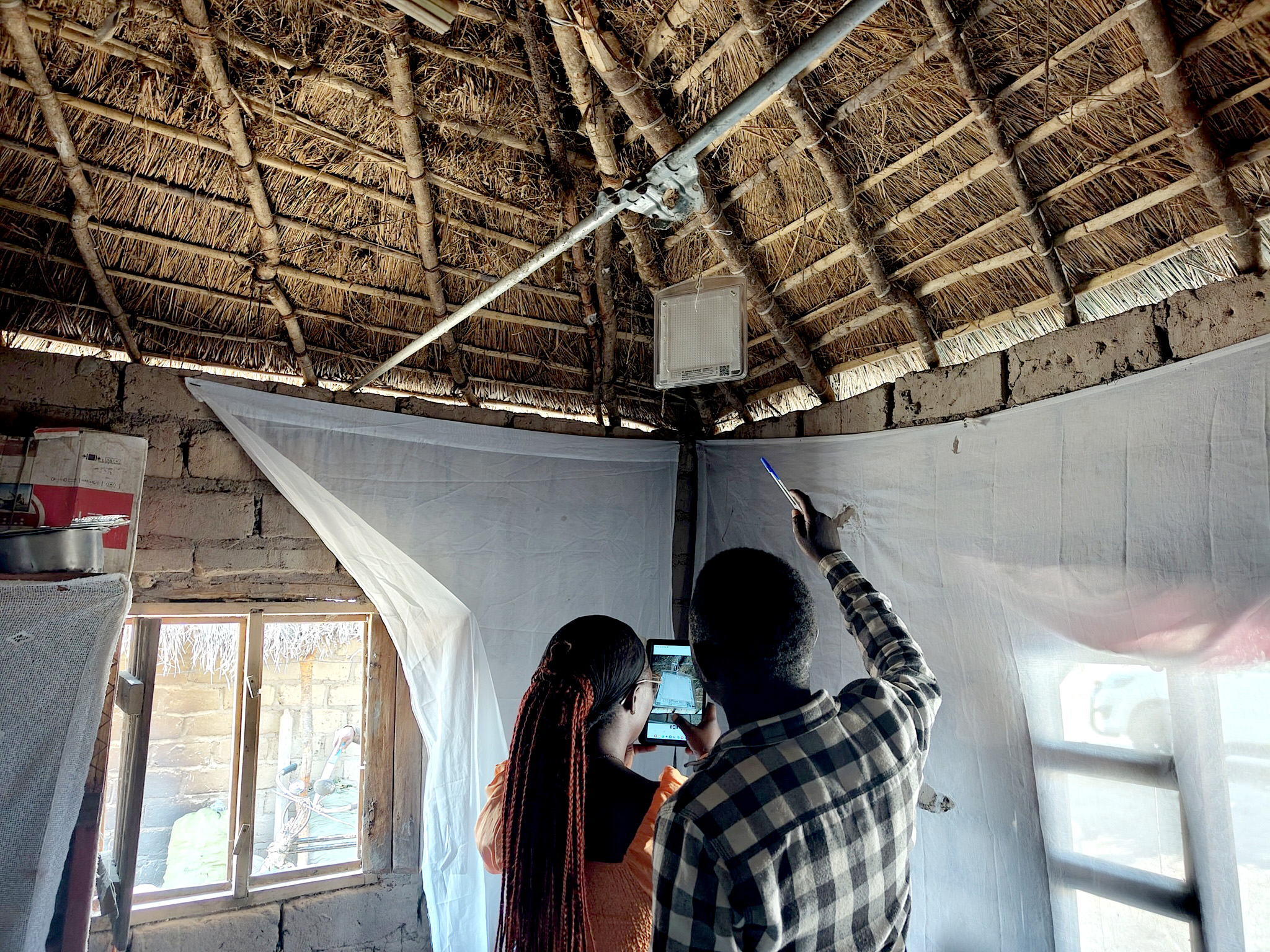
FEATURED RESEARCH 2024
Estimating infectious bites across communities
Community estimates combine human behavior and mosquito measurements to compare potential malaria exposure among net users and nonusers in western Zambia.
-
2013
CAMRE established
-
10+
Countries reached by our research
-
150+
Evidence-based publications
| Measure malaria burden |
| Evaluate interventions |
| Strengthen surveillance |
| Translate evidence |
ABOUT CAMRE
Applied research at the intersection of science and implementation
CAMRE is based in the Department of Tropical Medicine and Infectious Disease at Tulane University's Celia Scott Weatherhead School of Public Health and Tropical Medicine. We generate evidence that helps malaria programs select, target, deliver, and evaluate interventions in real-world settings.
Our work links epidemiology, health economics, geospatial analysis, implementation science, vector control, social science, and program evaluation—bringing the right methods to the decisions partners need to make.
Our Mission
Build a practical evidence base for malaria control and elimination while strengthening the ability of researchers and programs in malaria-endemic settings to generate and use that evidence.
WHAT WE DO
Capabilities across the evidence cycle
CAMRE teams move from defining the problem to generating evidence, supporting implementation, and communicating findings for policy and practice.
01 — Epidemiology and transmission
Measuring malaria burden, transmission patterns, risk factors, and population-level outcomes.
02 — Impact evaluation
Designing rigorous evaluations of programs and interventions under real-world conditions.
03 — Surveillance and analytics
Improving routine information systems, geospatial analysis, risk mapping, and data use.
04 — Vector control research
Evaluating established and next-generation tools, including delivery, coverage, and durability.
05 — Economics and optimization
Assessing costs, cost-effectiveness, resource allocation, and the value of alternative strategies.
06 — Implementation and behavior
Studying feasibility, acceptability, use, and the systems that turn interventions into impact.
FEATURED PROJECT
2026–2027 · Zambia · Ethiopia
SPEED-UP
Spatial Emanator Evidence Generation for Delivery and Uptake
A multi-country implementation and evaluation project examining how spatial emanators perform under real-world malaria-control conditions.
Led by Tulane in partnership with IVCC, Akros Inc., Jimma University, and national malaria programs, SPEED-UP combines malaria prevalence and household surveys, routine surveillance and coverage analysis, 12-month product durability monitoring, mosquito collections, and bioefficacy testing. The evidence will support national decisions and global policy on effectiveness, cost-effectiveness, coverage, durability, acceptability, and programmatic use.
| Project leads Joshua Yukich and Ruth Ashton | Country partners Akros Inc. and Jimma University | Core evidence Epidemiology · Entomology · Economics · Implementation |
Study Components
- Baseline and endline prevalence surveys
- Routine surveillance and geospatial analysis
- Coverage and 12-month durability monitoring
- Baseline, post-deployment, and endline mosquito collections
- Spatial emanator bioefficacy testing
- Cost and cost-effectiveness analysis
RESEARCH PORTFOLIO
Ongoing and completed research
Following SPEED-UP, explore other CAMRE projects connecting rigorous methods with the operational needs of malaria programs and partners.
SENSE Trial — Ongoing 2026–2028 · Uganda
The Spatial Emanators / Indoor Residual Spraying Evaluation is a three-arm cluster-randomized malaria trial sponsored by Pilgrim Africa. CAMRE provides independent statistical and health-economic support, including randomization, analysis planning, primary endpoint analysis, costing, and cost-effectiveness analysis.
Focus: Spatial emanators and malaria prevention
SENSE Trial
2026-2028
Uganda
Spatial Emanators / Indoor Residual Spraying Evaluation (SENSE) is a three-arm cluster-randomized malaria trial sponsored by Pilgrim Africa.
Focus: health economic support and analysis
PMI Insights
Completed 2020–2025
Multi-country
Generating evidence to address critical gaps in malaria-control policy, strategy, and implementation guidance.
Focus: Evidence for policy and programs
PMI Measure Malaria
Completed 2019–2025
Multi-country
Strengthening malaria information systems and developing methods and tools to address priority health information challenges.
Focus: Surveillance and data use
Attractive Targeted Sugar Baits
Completed 2018–2024
Zambia · Mali · Kenya
Evaluating a novel vector-control tool through community-randomized trials, including malaria outcomes and field delivery.
Focus: Next-generation vector control
Additional Areas of Work
Mass drug administration; Next-generation insecticide-treated nets; Epidemic detection systems; Cost-effectiveness; Population surveys; Capacity strengthening.
FEATURED RESEARCH INSIGHT
Peer-reviewed evidence · 2024
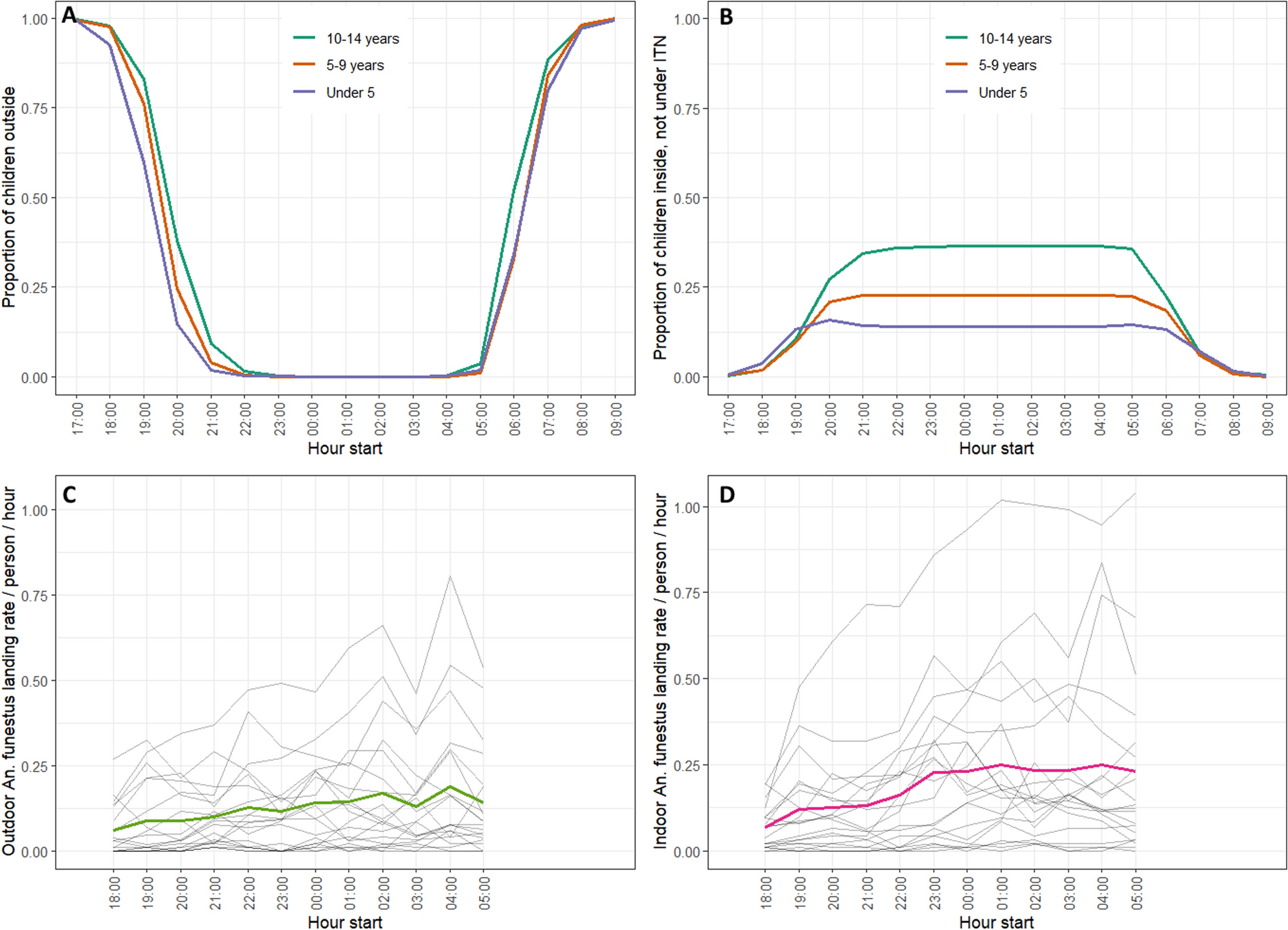
Children’s nighttime activities and mosquito biting patterns in Western Province, Zambia. Source: Ashton et al. (2024), Figure 1.

PERSISTENT TRANSMISSION
Why can malaria transmission persist even when bed-net coverage is high?
Protection depends not only on whether a household owns a net, but also on when children are indoors, when they are under a net, and when malaria mosquitoes bite.
CAMRE researchers interview-reported nighttime activities with indoor and outdoor mosquito-landing patterns. The analysis helps identify the hours when exposure can remain—and where additional vector-control tools may close the gap.
| Setting Western Province, Zambia | Evidence Human behavior + entomology | Study data 2021–2023 |
Interdisciplinary by design
Selected CAMRE leadership and researchers bring expertise across epidemiology, economics, surveillance, vector control, social science, and implementation.
Thom Eisele, PhD, MPH Director Ruth Ashton, PhD Joshua Yukich, PhD Kristin Banek, PhD | Joe Keating, PhD Paul Hutchinson, PhD Katherine Andrinopoulos, PhD Yazoume Ye, PhD |
FEATURED PUBLICATIONS
Selected publications from CAMRE research
Recent peer-reviewed work across service delivery, vector control, surveillance, and program effectiveness. Select a paper to read the full publication.
AJTMH · 2024
| Trials · 2023
| Malaria Journal · 2023
|
Can outreach training and supportive supervision improve competency in malaria service delivery? Evaluation across Cameroon, Ghana, Niger, and Zambia. | Master statistical analysis plan for attractive targeted sugar bait phase III trials Multi-site trials in Kenya, Mali, and Zambia. | Effectiveness of community case management on severe malaria and inpatient malaria deaths A dose-response study using routine health information system data in Zambia. |
PARTNER WITH CAMRE
Bring us the decision your program needs to make.
We welcome conversations with research collaborators, funders, ministries of health, implementers, and institutions seeking rigorous applied malaria research and evaluation.
Research and partnership inquiries
- teisele@tulane.edu
- mhotchki@tulane.edu
- +1 504 988-3542
- 1440 Canal Street, Suite 2350 New Orleans, LA 70112