
Research Project: Understanding Water Insecurity in Morocco
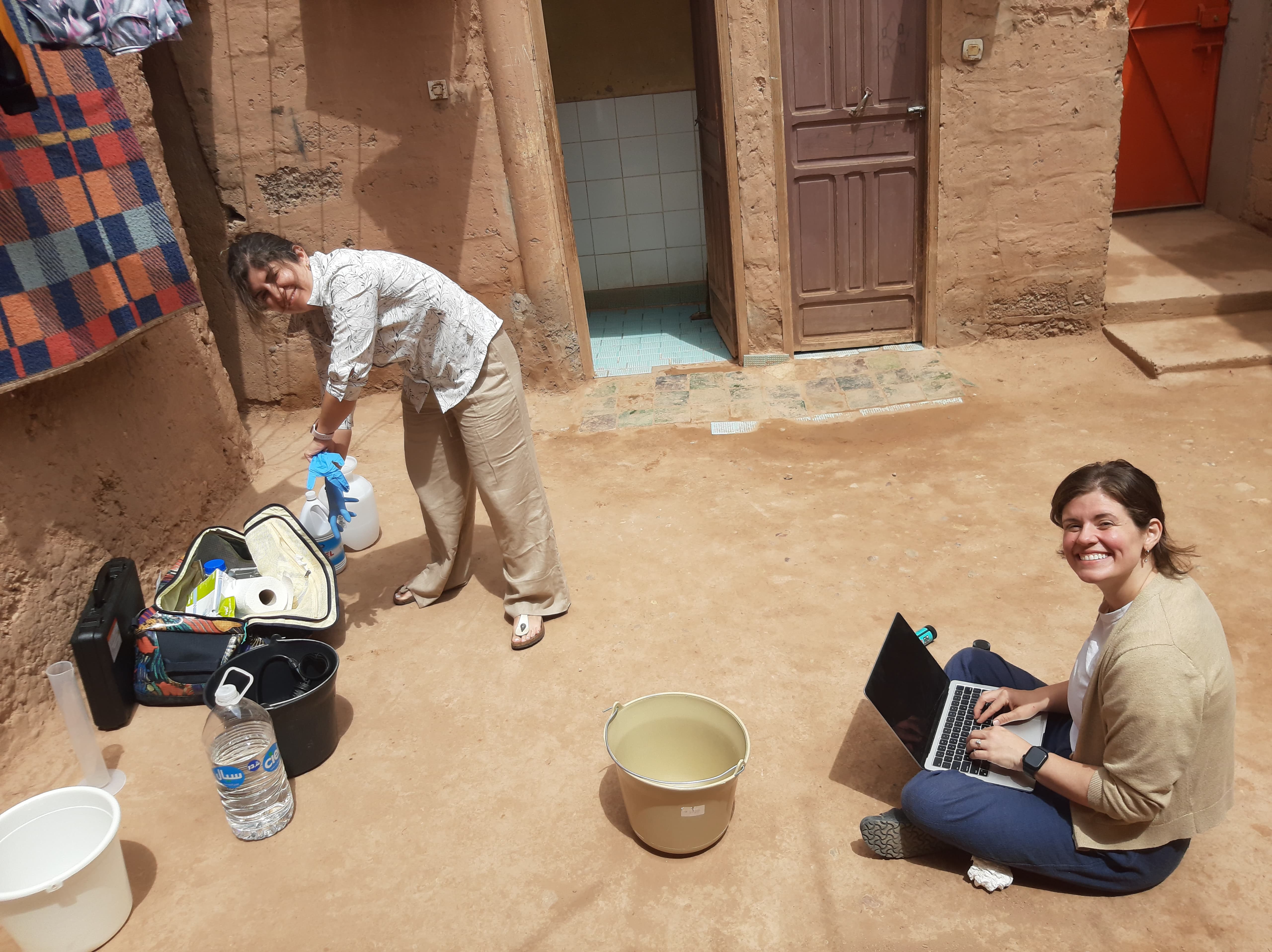
At a Glance
Research Area
Water Insecurity | Psychosocial Health | Physical Health | Nutrition
Location
Zagora Region, Morocco
Funding
American Institute for Maghreb Studies
Newcomb Institute, Tulane University
ByWater Institute, Tulane University
Tulane Faculty
Shalean Collins, PhD, MPH, RD | International Health & Sustainable Development (PI)
Status
Active 2025–present (data analysis and write-up)
Project Highlights
- Mixed-methods study of water insecurity among rural families in the Zagora Region of Morocco
- Combines qualitative research, household surveys, and water quality testing
- Validation of a novel Water Insecurity Coping Strategies Index
- Findings shared with community members to raise awareness of water and health
Project Details
Overview
This mixed-methods research project examines how rural households in Morocco experience and cope with water insecurity as a downstream outcome of exposure to climate and economic shocks, and the cumulative effects on physical and psychosocial health. The team combined qualitative research, household surveys, and water quality testing in the Zagora Region, in collaboration with the Tulane Department of Environmental Health Sciences, to validate a novel Water Insecurity Coping Strategies Index.
Why This Matters
Climate and economic shocks can strain rural households' access to water, and water insecurity can take a cumulative toll on physical and psychosocial health. How families cope with chronic water insecurity can also shape their vulnerability and resilience. This project looks closely at those coping strategies to better understand how households adapt.
Our Approach
The research team used a mixed-methods approach that included the following activities.
- Qualitative research with rural families in the Zagora Region.
- Household surveys of rural families.
- Water quality testing, conducted in collaboration with the Tulane Department of Environmental Health Sciences.
- Validation of a novel Water Insecurity Coping Strategies Index.
Potential Impact
The project is validating a novel index to better understand how families adapt to chronic water insecurity and how those coping strategies affect household vulnerability and resilience. Findings, including water quality testing results, have been shared broadly with community members to raise awareness of water and health.
Key Achievements
- Mélodie Nasr, a PhD candidate collaborator on the project, won the Delta Omega Chapter Eta poster competition and will present results at APHA 2026.
- Dr. Collins and Ms. Nasr will present two separate abstracts at the UNC Water & Health conference in 2026.
- Study results, including water quality testing, were shared broadly with community members to raise awareness of water and health.
Featured Innovation
The Water Insecurity Coping Strategies Index is a novel tool being validated through this project. It is designed to show how families adapt to chronic water insecurity and how those strategies affect household vulnerability and resilience.
Student Engagement
Students with qualitative or quantitative data analysis experience are welcome to contact the PI about opportunities to collaborate on academic manuscripts.
Research Partnerships
Tulane University
- Tulane WSPH Department of Environmental Health Sciences
Collaborators
- Sofyan Essarroui, PhD
Funding Partners
- American Institute for Maghreb Studies
- Newcomb Institute, Tulane University
- ByWater Institute, Tulane University
Fieldnotes & Frontlines
Listen or watch interviews with WSPH researchers working around the world
STUDENT OPPORTUNITIES
Discover Practica, fellowships, and global research experiences.