
Research Project: Receptivity, Expectations, Usability, Sustainability and Enjoyment (REUSE) of menstrual cups among rural women in Rwanda
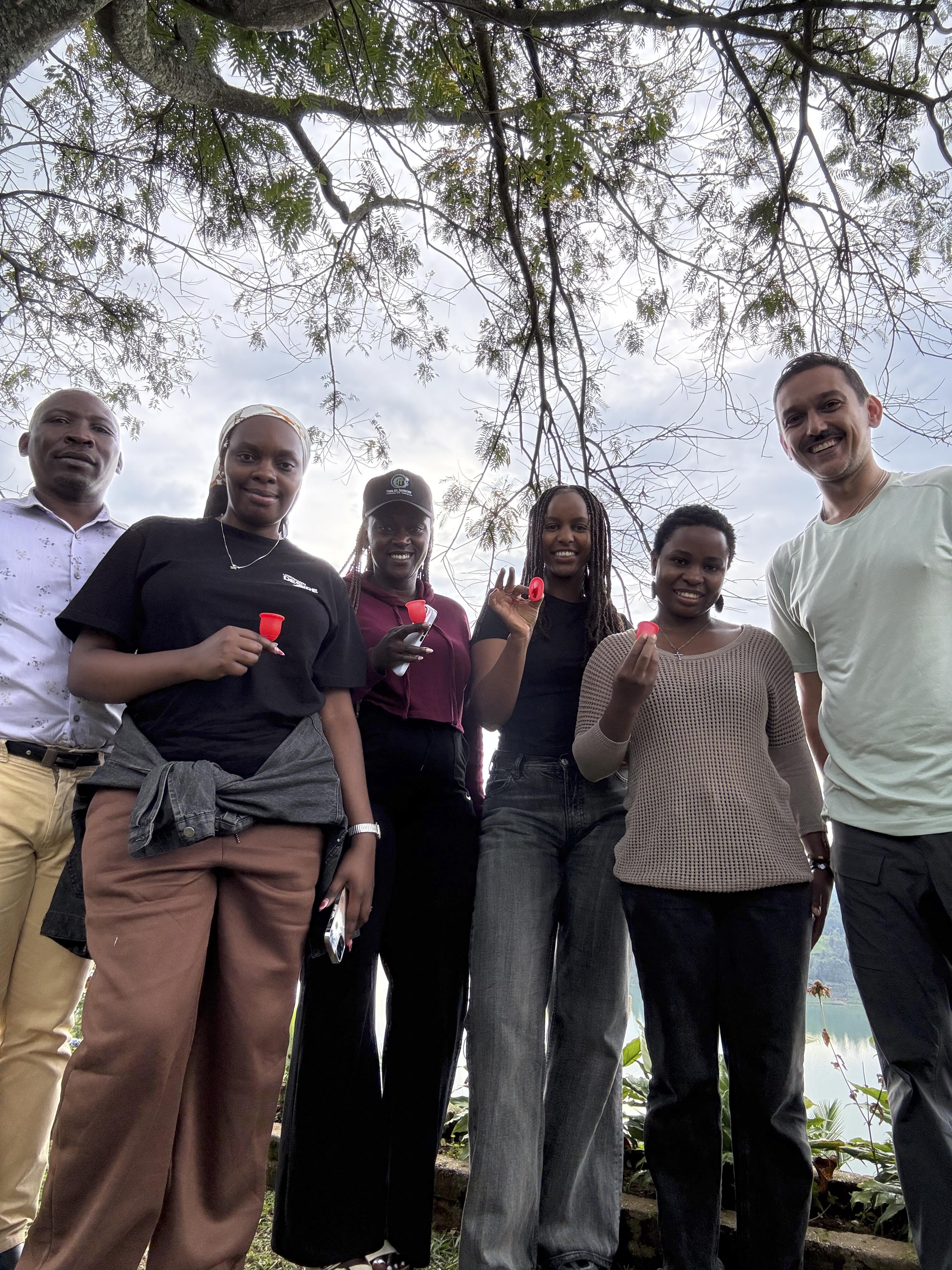
At a Glance
Research Area
Menstrual Health | Period Poverty | Women's Health
Location
Rwanda
Funders
Tulane Newcomb Institute
Rwanda Society of Obstetricians and Gynecologists
Faculty
Kristefer Stojanovski, PhD, MPH | Social, Behavioral, and Population Sciences (PI)
Partners
Belyse Mukayiranga | Hope for Tomorrow, Rwanda (Local PI)
Status
Active, 2026 (pilot study). Seeking additional funding to grow the work after the pilot.
Highlights
- Pilot study of menstrual cups among rural women and girls in Rwanda
- Surveys and focus groups capture knowledge, finances, and lived experience
- Findings used to support Ministry of Health approval for importing cups
- Local partnership with Hope for Tomorrow
Project Details
Overview
REUSE is a pilot project that aims to address period poverty among rural women and girls in Rwanda by using menstrual cups. The team is learning what women and girls know about menstruation and menstrual health, how they experience using the cups, and how the cups change household dynamics and finances.
Why This Matters
Around 1.9 billion women of reproductive age menstruate each month, and each spends an average of 65 days a year managing it. Many girls and women still lack access to affordable, safe, and culturally appropriate menstrual products. In low- and middle-income countries, they often face high product costs, cultural taboos, limited sexual and reproductive health education, and inadequate water, sanitation, and hygiene infrastructure.
Menstrual cups are a promising and sustainable option. Made of medical-grade silicone, rubber, latex, or elastomer, the cup collects menstrual flow, can be emptied and reinserted, and only needs to be boiled at the end of each cycle. A single cup can last up to 10 years.
Our Approach
Dr. Stojanovski developed the pilot with his local partner, Belyse Mukayiranga of Hope for Tomorrow, to examine how women and girls use menstrual cups and how the cups change their menstrual health management. The study uses a mixed-methods approach.
- Surveys measure knowledge, attitudes, and finances
- Focus groups capture women's and girls' lived experiences with the cups
Potential Impact
Participants describe less fear and shame around menstruation. They also report saving money and being better able to attend school and work.
Key Achievements
- Increased knowledge among key stakeholders, including gynecologists, about how menstrual cups support menstrual health and hygiene
- Using the data to secure Ministry of Health approvals for importing menstrual cups
- Identifying ways to support women's economic empowerment and social entrepreneurship through selling the cups locally
Student Engagement
A Rwandan doctoral student is part of the project and recently supported data collection with women and girls who decided not to use the cups.
Research Partnerships
Tulane University
- Social, Behavioral, and Population Sciences, School of Public Health and Tropical Medicine
Implementing Partner
- Hope for Tomorrow, Rwanda
Funders
- Tulane Newcomb Institute
- Rwanda Society of Obstetricians and Gynecologists
Fieldnotes & Frontlines
Listen or watch interviews with WSPH researchers working around the world
STUDENT OPPORTUNITIES
Discover Practica, fellowships, and global research experiences.